

Every year, I watch the same moment unfold: a student raises a hand and says, “But how do I make someone agree with me?” That, my friends, is where persuasive paragraph writing steps onto the stage- confident, charming, and slightly determined to win hearts and minds.
In this lesson, I’ll walk you through the definition, purpose, structure, and examples of a persuasive paragraph, all with classroom-friendly practice. Think of one strong paragraph as a tiny superhero cape for your ideas: small, but powerful. Master this skill, and your opinions won’t just sit on the page. They’ll stand up, speak out, and persuade.
What Is a Persuasive Paragraph Writing?
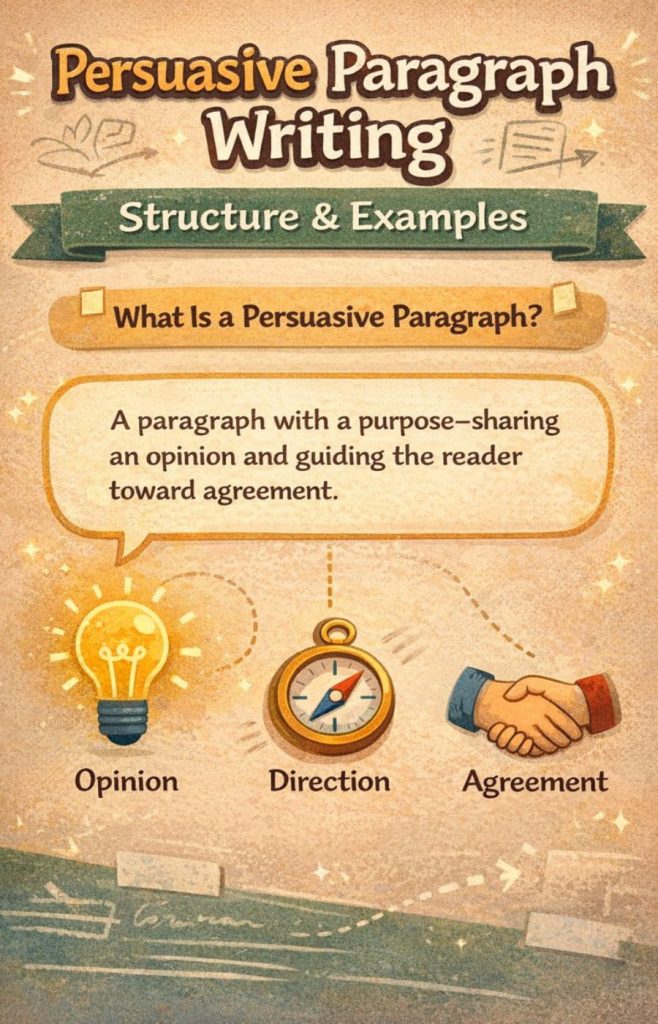
When students ask for the meaning of a persuasive paragraph, I tell them this: It’s a paragraph with a purpose. To define a persuasive paragraph simply, it shares an opinion and gently, but firmly, tries to pull the reader to that side using reasons, evidence, and a confident tone.
i) Definition of a Persuasive Paragraph (Meaning in Simple Terms)
Let me put this in classroom language. A persuasive paragraph is where you take a stand and invite the reader to stand with you. You don’t just say what you think. You explain why your thinking makes sense. Persuasion means influence, not shouting. You’re guiding the reader with logic, belief, examples, and just the right emotional nudge.
Unlike a narrative paragraph, you’re not telling a story. Unlike a descriptive paragraph, you’re not painting a picture. You’re doing something braver: you’re arguing politely.
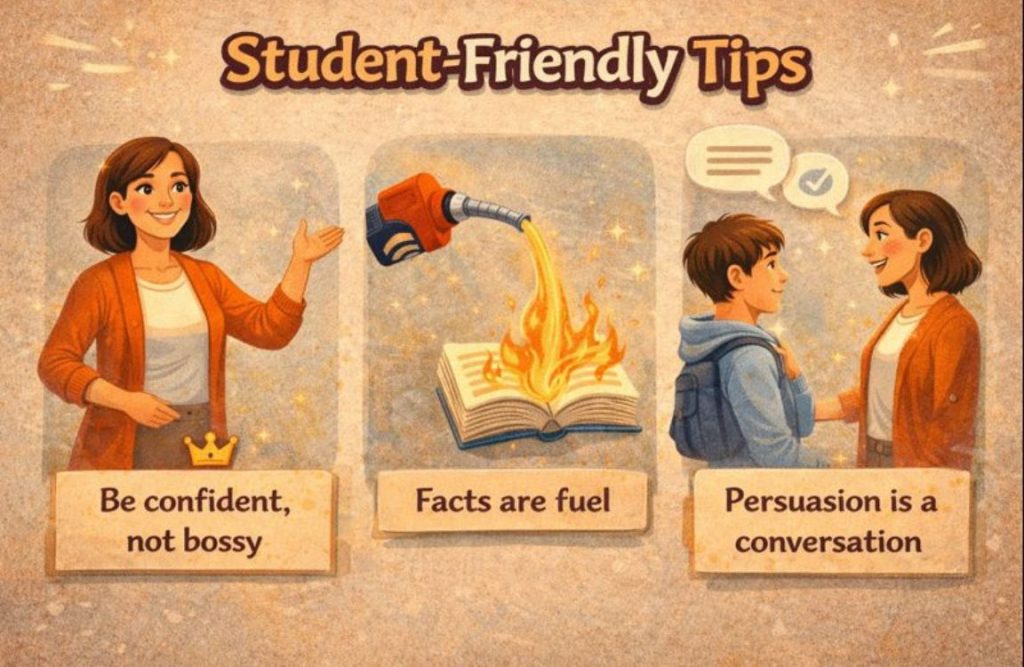
When I teach this, I tell my students, “Your paragraph should sound confident, not bossy- like a debate team captain, not a drill sergeant.” One clear opinion, a few strong reasons, and a tone that says, Trust me, I’ve thought this through.
ii) Example of a Persuasive Paragraph (Short & Clear)
School uniforms should be mandatory for students. Uniforms reduce distractions in the classroom and help students focus more on learning than fashion. They also promote equality by removing visible economic differences. For these reasons, school uniforms create a more focused and fair learning environment.
When I show this example in class, I ask my students to spot the opinion first. It’s right there at the start. Then we underline the reasons and circle the final sentence that nudges the reader toward agreement. Simple, sharp, persuasive.
Purpose of a Persuasive Paragraph
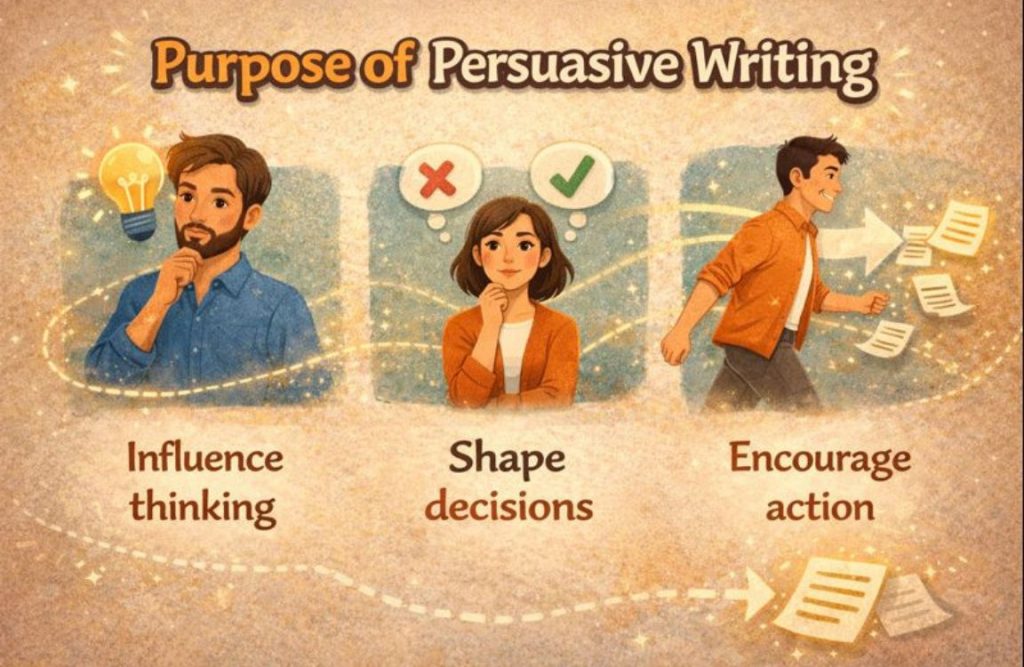
When I explain the purpose of a persuasive paragraph, I tell my students it’s not about explaining facts or winning arguments. It’s about influence- shaping how someone thinks, feels, or acts, using calm confidence instead of verbal arm-wrestling.
i) Why Writers Use Persuasive Paragraphs?
I’ve seen this moment a hundred times: a student leans back, rereads their paragraph, and says, “Wait… this actually sounds convincing.” That’s the magic. Writers use persuasive paragraphs because they want their ideas to matter. Maybe they’re trying to change a rule, support a belief, or push back against an unfair situation.
Persuasive writing gives opinions a backbone. Instead of tossing thoughts into the air and hoping they land, writers build them carefully so others can follow. It’s how you influence decisions, spark agreement, and sometimes plant a quiet seed of doubt that grows later.
I tell my class: if your words can make someone pause and rethink, even for a second, you’ve done your job.
ii) Where Persuasive Paragraphs Commonly Appear?
Once students realize this skill isn’t trapped inside textbooks, their eyes light up. Persuasive paragraphs pop up everywhere.
In school, they show up in essays, exam answers, and debate speeches. Outside the classroom, they sneak into opinion articles, advertisements, complaint letters, and even those social media posts trying to convince you to click, buy, or agree.
Anytime someone is nudging an audience toward a choice, belief, or action, persuasion is at work. I like to say persuasive paragraphs are the quiet influencers of the writing world- no megaphone needed, just well-chosen words doing their subtle, powerful work.
Once students understand why persuasion matters, the next question is obvious: how do we build it?
Structure of Persuasive Paragraph Writing
When I introduce the format of a persuasive paragraph, I call it a smooth, three-step journey. The persuasive paragraph writing structure moves logically: start with a clear opinion, walk the reader through strong reasons, and finish with a nudge that lingers in their mind long after the last sentence.
i) Topic Sentence: (Claim or Opinion)
This is the moment I clap once in class and say, “State your position. No whispering.” A persuasive paragraph lives or dies by its topic sentence. It must clearly announce what you believe, not circle around it like a shy cat. Strong claims are confident, specific, and opinion-based, not vague facts pretending to be brave.
I remind my students that confusion kills persuasion. If your reader has to guess your opinion, they won’t follow you. A sharp topic sentence works like a signpost on a road trip: it tells the reader exactly where you’re headed and why they should stay in the car.
ii) Supporting Reasons and Evidence:
Once the claim is on the table, this is where you earn trust. I tell my students, “Now prove you didn’t just wake up grumpy with an opinion.” Supporting reasons give your claim weight. These can be facts, short examples, personal experiences, or clear logical explanations.
Think of this section as the muscles of your paragraph. Without them, your opinion is just a skeleton rattling around. Each reason should connect directly to the claim and gently push the reader closer to agreement, step by step, without shouting.
iii) Call to Action or Concluding Sentence:
This is my favorite part, the graceful exit. A persuasive paragraph shouldn’t just stop. It should land. The concluding sentence reminds the reader why your opinion matters or invites them to think, agree, or act.
I tell my class to imagine the reader closing the paragraph and thinking, “Hmm… they have a point.” Whether you reinforce your claim or encourage action, this final line is the echo in the room. If written well, it’s the sentence that stays behind, tapping the reader on the shoulder long after the paragraph ends.
How to Write a Persuasive Paragraph: Step-by-Step
When students ask me how to write a persuasive paragraph, I smile and say, “Relax, this isn’t magic. It’s a method.” Persuasion becomes far less intimidating when you break it into clear steps. Think of it as building confidence one sentence at a time, starting strong and finishing with purpose.
Step 1: Choose a Clear Position
Before any writing happens, I make my students stop and decide what they actually believe. One opinion. One side. No fence-sitting. A persuasive paragraph can’t juggle mixed messages. It needs focus. If you argue for something, commit fully.
I often tell them, “If you’re unsure, your reader will be too.” Choosing a clear position gives your paragraph direction. It’s like setting a destination before starting a journey. Without it, you’re just wandering with a pen.
Step 2: Write a Strong Topic Sentence
Now comes the moment that decides everything: how to start a persuasive paragraph. I tell my class this sentence is the paragraph’s handshake- firm, confident, and impossible to ignore. Your topic sentence should clearly state your opinion and hint at why it matters.
I encourage students to avoid timid language. This isn’t the place for “maybe” or “I think sort of.” A strong topic sentence guides the reader and promises that what follows is worth their attention. It’s the spine holding the paragraph upright.
Step 3: Add Reasons, Evidence, and Examples
This is where persuasion earns its paycheck. I remind students that opinions alone don’t convince, reasons do. Each reason should support the position logically, using examples, facts, or real-life experiences to make the argument believable.
I compare this step to stacking blocks. Each reason adds height and strength. If one block is weak or random, the whole structure wobbles. Clear explanations help the reader follow your thinking without feeling pushed.
Step 4: End With Persuasion (Call to Action)
I always say, “Don’t fade out, finish strong.” The final sentence should leave the reader thinking, agreeing, or ready to act. Whether you restate your opinion or gently urge the reader forward, this is your last persuasive push.
When done well, the ending feels like a door closing softly but firmly. The reader steps away not just informed, but convinced, and that’s when I know the paragraph worked.
Persuasive Paragraph Starters & Topic Sentences
I’ve watched brilliant ideas stall simply because students don’t know how to begin. That first sentence matters. It sets the mood, the confidence, the direction. Strong paragraph starters for persuasive writing act like a running start. Once you’re moving, persuasion feels possible.
i) Persuasive Words to Start a Paragraph:
When I teach openings, I call these verbal door-openers. They signal confidence and purpose. Try words and phrases like clearly, undoubtedly, most importantly, in my view, it is essential that, or there is no question that.
Each one gently nudges the reader into agreement before the argument even begins. Used wisely, these starters add authority without sounding bossy- like a calm teacher who knows the answer and smiles anyway.
ii) Effective Topic Sentence Examples:
A strong topic sentence for a persuasive paragraph states an opinion and dares the reader to respond. I show my students lines like: School uniforms should be required because they reduce distractions, or Reading every day is essential for building strong thinking skills.
Notice how these sentences don’t wander. They plant a flag. Clear opinion, confident tone, no apologies. That’s the persuasive sweet spot.
iii) Sentence Frames for Students:
For students who freeze at the starting line, sentence frames are lifelines. I offer patterns like: I strongly believe that ___ because ___, Everyone should ___ since ___, or It is important to ___ in order to ___.
These frames remove fear and make room for ideas. Once confidence grows, the training wheels come off, and real persuasion begins.
Examples of a Persuasive Paragraph
When I teach persuasion, I don’t just explain it. I show it. Examples are where theory puts on shoes and walks into real life. They let students see persuasive techniques in action, not as rules, but as choices writers make deliberately.
i) Sample Persuasive Paragraph: (Annotated)
Sample Paragraph: School Libraries
Topic Sentence: School libraries should stay open after classes because they support learning beyond the bell.
Reason 1: Many students rely on the library for quiet study spaces they don’t have at home.
Evidence: A recent school survey showed that 62% of students complete homework more efficiently in the library than elsewhere.
Reason 2: Extended library hours also encourage reading for pleasure, not just for exams.
Evidence: When our library stayed open during exam season last year, book borrowing increased noticeably.
Conclusion: By keeping libraries open after school, we invest not only in grades but in lifelong learning habits.
Now pause. This is where I’d tap the board and say, “Notice how every claim earns its keep.” Nothing is wasted. Persuasion is economical writing.
ii) Short Persuasive Paragraph Examples:
Here are a few short persuasive paragraph examples I use to show range:
• Technology: Schools should allow limited phone use in class because digital tools can support research and collaboration when used responsibly.
• Environment: Recycling should be mandatory in communities since small daily actions collectively reduce environmental damage.
• Education: Group projects deserve a place in grading systems because they teach communication skills that exams cannot measure.
Each sample of a persuasive paragraph has the same skeleton- claim, reason, support- but a different voice and goal. That’s the lesson I underline: persuasion adapts. It doesn’t sound the same way in every room.
iii) Everyday Persuasive Paragraph Example:
Let’s get practical. This is the example of a persuasive paragraph students instantly relate to:
Homework should be limited on school nights because students need time to rest and reset. After six hours of classes, excessive homework leads to burnout rather than better learning. Studies consistently show that tired students retain less information, no matter how long they stare at notes. Reasonable homework policies allow students to balance academics, family time, and mental health, creating learners who are focused, motivated, and ready to participate the next day.
When I read this aloud in class, heads nod. That’s persuasion’s secret weapon: relevance. If readers feel seen, they’re already halfway convinced.
Persuasive Paragraph Writing for Students
In my classroom, persuasive writing grows the way students do, step by step. Expectations shift with age: younger writers learn to take a stand, while older ones learn to defend it intelligently. Same skill, deeper layers, sharper thinking.
i) Persuasive Paragraph for Middle School: (Grades 6–8)
At this stage, persuasion is about confidence and clarity. I guide students to express one clear opinion, support it with simple reasons, and lean on structure like a friendly handrail. Here is a persuasive paragraph example for middle school students that reveals mature persuasion isn’t louder. It’s smarter.
Sample Paragraph: Later School Start Times
Schools should start later in the morning because well-rested students learn more effectively. Early start times often leave students tired, unfocused, and irritable, which harms both learning and behavior. Research shows that adolescents’ brains function best after adequate sleep, making early mornings especially challenging. When schools begin later, students arrive more alert and ready to participate in lessons. This change can also improve attendance and reduce classroom disruptions. Critics worry about schedule adjustments, but academic success should come first. A later start time supports students’ physical health, mental well-being, and academic performance. By aligning school schedules with students’ natural sleep cycles, schools can create a healthier, more productive learning environment.
ii) Persuasive Paragraph for High School Students:
By high school, I expect arguments to lift heavier weights. Claims sharpen, evidence deepens, and students start anticipating objections instead of pretending disagreement doesn’t exist. Here is a persuasive paragraph example for high school students reveal that mature persuasion isn’t louder. It’s smarter, calmer, and far more convincing.
Sample Paragraph: Homework Policies
Homework policies should be reconsidered in high school because excessive workloads often reduce learning instead of improving it. While practice is necessary, assigning hours of homework each night leaves students mentally exhausted, limiting their ability to think critically. Research suggests that overloaded students retain less information and experience higher stress levels. Some argue that heavy homework prepares students for college, but preparation should build skills- not burnout. Balanced assignments that emphasize quality over quantity encourage deeper understanding and long-term retention. By adjusting homework expectations, schools can promote academic success while also supporting students’ mental well-being.
Persuasive Paragraph Writing Topics for Practice (General)
When students ask, “What should I write about?” I grin; that question means thinking has already started. Strong persuasive paragraph topics feel close to real life, not trapped in textbooks. Here are a few I often use:
• Should schools limit homework on weekdays?
• Are social media platforms helpful or harmful for teenagers?
• Should community service be mandatory for students?
• Is online learning as effective as classroom learning?
• Should public places ban single-use plastics?
• Do school uniforms improve discipline?
These topics work because they invite opinion and evidence. I remind students: if you can argue about it at the dinner table, you can probably write a persuasive paragraph about it in class.
Grade 8 Persuasive Writing Prompts
Grade 8 sits right at the thinking crossroads- students are curious, opinionated, and finally brave enough to disagree politely. That’s gold. I use persuasive paragraph writing topics for grade 8, like these:
• Should students be allowed to choose some of their subjects?
• Is too much screen time affecting student concentration?
• Should schools start later in the morning?
• Are exams the best way to measure learning?
Each prompt asks for more than opinion. It asks for reasoning. When I introduce these in class, I say, “Convince me. I’m listening.” And that moment, when students realize their ideas matter, that’s when persuasive writing truly begins.
Persuasive Paragraph vs. Argumentative Paragraph
When students ask me about the difference, I grab the chalk and smile. A persuasive paragraph is a friendly nudge. It invites agreement using warmth, logic, and shared values.
An argumentative paragraph, on the other hand, puts on its debate shoes. It takes a firm position, anticipates objections, and proves its case with heavier evidence.
Persuasion feels like a thoughtful conversation after class; argumentation feels like a structured debate under bright lights. Both aim to convince, but they travel different roads.
I tell my students: choose persuasion when you want hearts and minds- argumentation when you’re ready to defend your ground with armor on.
FAQs:
Can a persuasive paragraph include facts and opinions together?
Absolutely, and it should. I tell my students that opinion is the engine, but facts are the fuel. An argument powered only by feelings sputters; one backed by evidence moves smoothly and convinces readers you’ve done your homework.
How long should a persuasive paragraph be?
In my classroom, I say: long enough to persuade, short enough to stay sharp. Usually, 8-10 focused sentences work well. If your paragraph starts rambling, that’s your cue. Your argument needs trimming, not stretching.
What tone should be used in persuasive writing?
Think confident, not cranky. Persuasive writing should sound thoughtful, respectful, and sure of itself. I remind students: you’re inviting readers into your thinking, not yelling across the room or trying to win an argument on volume alone.
Can first-person pronouns be used in a persuasive paragraph?
Yes, when used wisely. I often encourage “I” in student writing because it adds ownership and honesty. Just don’t let “I think” replace reasoning. Your ideas still need evidence to stand upright, like good posture in class.
What mistakes should students avoid in persuasive paragraph writing?
The biggest traps? Repeating opinions without proof, wandering off-topic, and forgetting the reader exists. I joke that persuasion isn’t a diary entry. It’s a conversation. If you’re not anticipating questions, your argument is talking to itself.
Conclusion:
Persuasive paragraph writing is more than an assignment. It’s a toolkit for thinking, arguing, and connecting. I tell my students: a strong paragraph has a clear opinion, solid reasons, evidence, and a confident close.
Practice turns this structure from rules on a page into a skill you carry everywhere- from essays to real-life debates. The more you write, revise, and read examples, the sharper your persuasion becomes. Remember, every paragraph you craft is a small victory: your voice is heard, your ideas matter, and your argument stands tall.
Teachers and students alike- embrace these strategies, experiment boldly, and watch persuasive paragraph writing transform your academic work and everyday communication.